
The Complete Guide for Doctors Who Want More Than Clinical Practice
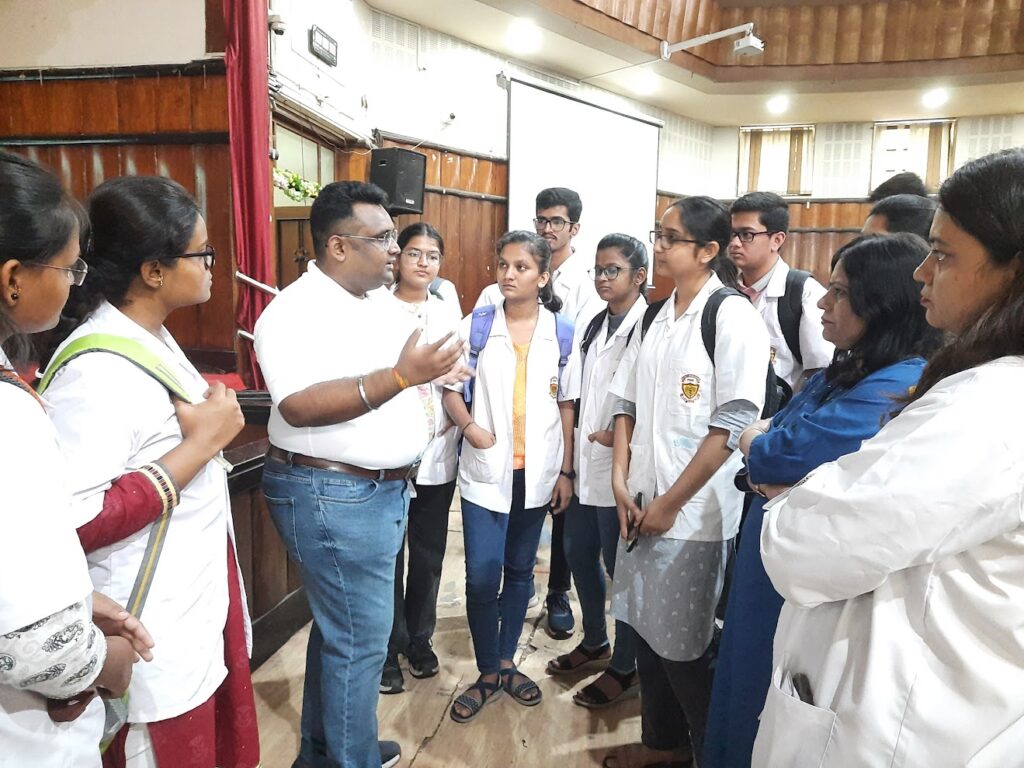
Introduction: Medicine Was Just the Beginning
| The common belief is that every MBBS graduate must pursue MD/MS or spend a lifetime in clinical practice. But today’s healthcare ecosystem tells a different story — one of remarkable diversity, extraordinary opportunity, and careers that can be just as impactful, and often far more financially rewarding, than a general clinical posting. |
India produces over 90,000 MBBS graduates every year. In 2024, over 2.2 million candidates registered for NEET PG competing for just 65,000 seats across all specialties. The mathematics is unforgiving. But the solution is not despair; it is strategic diversification.
Beyond the familiar clinical career ladder lies an expansive landscape of opportunity: hospital boardrooms, pharmaceutical boardrooms, policy think-tanks, healthtech startups, global research labs, media newsrooms, and consulting firms all of which increasingly value the specific intellectual and clinical rigour that comes with an MBBS degree.
Add to this the very real human dimension: an estimated 50% of Indian doctors report moderate-to-severe burnout within five years of starting clinical practice. The emotional and physical toll of emergency duties, long OPD hours, and the weight of critical decision-making without adequate institutional support is not a sign of weakness it is a signal worth paying attention to.
Choosing a non-clinical career is not abandoning medicine. It is choosing to practise medicine at a different altitude shaping systems, building products, advising institutions, and influencing millions rather than one patient at a time. This guide, drawn from 18 years of career counselling experience with MBBS graduates across India, maps every credible non-clinical pathway available to you with honest salary data, realistic growth trajectories, and practical next steps.
Why More Doctors Are Exploring Non-Clinical Careers
This is not a trend driven by dissatisfaction alone. It is driven by an expanding definition of what a doctor can accomplish.
1. Scalability of Impact
A clinical doctor impacts patients one consultation at a time. A doctor-turned-hospital CEO impacts thousands of patients through policy, staffing, and quality decisions. A doctor-turned-public health leader shapes the health of an entire district. Non-clinical careers offer leverage that clinical practice structurally cannot.
2. Better Work-Life Architecture
Most non-clinical careers operate on structured schedules — 9 to 6, five days a week, with predictable weekends and no emergency call duties. For doctors who value family time, personal health, or creative pursuits, this structure is transformative.
3. Cross-Industry Career Flexibility
An MBBS-qualified professional in consulting or pharma is not locked into one setting. Skills transfer across hospitals, biotech firms, insurance companies, VC firms, and international organisations — creating a truly portable, resilient career.
4. Financial Acceleration
While a freshly minted MD specialist may earn ₹60,000–₹1 lakh/month in the early years, a doctor with an MBA at a top consulting firm or a Senior Medical Affairs Manager at a multinational pharma company can earn ₹2–5 lakh/month within 5–7 years of MBBS — without the additional 3–5 years of PG training.
5. Passion That Extends Beyond the Clinic
Many brilliant MBBS graduates are entrepreneurs at heart, policy thinkers, communicators, technologists, or researchers. The clinical setting, as important as it is, may not be the environment where they do their best work. Choosing a non-clinical career aligned with one’s natural strengths is not a compromise — it is wisdom.
Career Options After MBBS: Quick Reference Guide
| Career Option | Primary Role | Growth Potential | Typical Work Environment |
| Medical Officer | Primary & preventive care | Moderate | Hospital / PHC / Corporate |
| Public Health | Policy, programs, epidemiology | High | Govt / UN / NGO / Field |
| Medical Research | Studies, trials, publications | High (long-term) | Lab / Academia / CRO |
| Medical Writing | Scientific & regulatory content | High | Remote / CRO / Pharma |
| Hospital Administration | Operations, quality, strategy | Very High | Hospital / Healthcare chain |
| Health Informatics | Digital health, EHR, data | Very High | IT / Hospital / Startup |
| Pharmaceutical Industry | MSL, Medical Affairs, PV | High | Pharma MNC / Field |
| Clinical Research (CRA) | Trial monitoring, GCP | High | CRO / Field / Sponsor |
| Medical Coding | ICD/CPT coding, RCM | Moderate | BPO / Remote / Hospital |
| Healthcare Consulting | Strategy, transformation | Very High | Consulting firm / MNC |
| Teaching & Academics | Education, curriculum | Moderate | Medical college / Online |
| Entrepreneurship | Startup founding, innovation | Unlimited (High risk) | Self / Co-working / Remote |
Detailed Career Profiles: Everything You Need to Know
The following profiles are drawn from ConsultCK’s 18 years of counselling MBBS graduates across India, tracking career outcomes across hundreds of diverse pathways. For each career, you will find scope, suitability, certifications, employers, salary ranges, and honest assessments of advantages and challenges.
1. Medical Officer (Government / Corporate / NGO)
The most direct non-specialist path after MBBS, offering structured employment with a fixed scope of practice and regular working hours.
What the Role Involves: Providing primary and preventive care at PHCs, CHCs, corporate campuses, NGOs, or industrial units. Responsibilities include OPD consultations, health camps, medical audits, and basic emergency management.
Best Suited For: Doctors who value stability, prefer working in structured systems, and are not yet ready for full private practice or specialist training.
Skills Required: Clinical communication, documentation, basic emergency care, public health awareness.
Certifications That Help: ATLS, BLS/ACLS certifications strengthen profiles for corporate and MNC roles.
Typical Employers: ESIC, CGHS, DRDO, Tata Group, Mahindra, Wipro, Apollo Medics, Aster CMI, NGOs such as MSF.
Career Growth Path: Medical Officer → Senior Medical Officer → Chief Medical Officer → Head of Occupational Health.
Salary Range in India: Government sector: ₹50,000–₹90,000/month. Corporate sector: ₹60,000–₹1.5 lakh/month depending on industry.
Advantages: Job security, defined working hours, no financial risk of private practice, good benefits.
Challenges: Limited clinical complexity, slower career advancement, may feel professionally stagnant over time.
2. Public Health Professional
One of the fastest-growing non-clinical fields, driven by India’s National Health Mission, global health agencies, and a post-COVID surge in public health investment.
What the Role Involves: Designing disease surveillance programs, managing community health initiatives, policy analysis, epidemiological research, and working with state or national health departments.
Best Suited For: Doctors passionate about systemic change, population-level impact, policy, and data-driven healthcare.
Skills Required: Epidemiology, biostatistics, health program management, policy writing, data analysis (SPSS, R, STATA).
Certifications That Help: MPH (Masters in Public Health), MHM (Masters in Health Management), DrPH. Courses from Johns Hopkins Bloomberg School of Public Health (Coursera) or IIPHG.
Typical Employers: WHO India, UNICEF, World Bank, PHFI, NHM, MOHFW, PATH, Clinton Health Access Initiative, icddr,b.
Career Growth Path: Program Officer → Senior Program Manager → Country Lead → Policy Advisor → Global Health Consultant.
Salary Range in India: Entry: ₹40,000–₹80,000/month. Mid-career WHO/UN roles: ₹2–5 lakh/month plus allowances.
Advantages: Global career opportunities, meaningful impact at scale, intellectually stimulating.
Challenges: Field postings in underserved areas, slower initial salary growth, competitive at senior levels.
3. Medical Research
India is among the world’s top destinations for clinical trials, with over 500 CROs and an expanding biomedical research ecosystem.
What the Role Involves: Conducting basic science or translational research, principal investigator roles in clinical trials, preclinical studies, hypothesis testing, and publishing in peer-reviewed journals.
Best Suited For: Doctors with an analytical mindset, intellectual curiosity, and patience for long-term results.
Skills Required: Research methodology, GCP certification, statistical analysis, scientific writing, grant writing.
Certifications That Help: Good Clinical Practice (GCP), ICH-GCP, CCRP (Certified Clinical Research Professional), PhD in relevant disciplines.
Typical Employers: ICMR, DBT, AIIMS Research Wing, Manipal Academy, Syngene, Cipla Life Sciences, Quintiles, PAREXEL.
Career Growth Path: Research Associate → Principal Investigator → Senior Scientist → Research Director.
Salary Range in India: Junior Researcher: ₹35,000–₹60,000/month. Senior roles: ₹1.5–4 lakh/month. International positions significantly higher.
Advantages: Intellectual fulfillment, publications strengthen academic credentials, potential for international collaborations.
Challenges: Slow career progression, funding dependency, high competition for grants.
4. Medical Writing
A high-demand, well-paying, and remote-friendly career that allows doctors to leverage their scientific knowledge in communication and documentation.
What the Role Involves: Writing clinical study reports, regulatory submissions (CTDs, IBs), scientific manuscripts, patient education materials, medical education content, and drug monographs.
Best Suited For: Doctors with strong written communication skills who enjoy translating complex science into clear, accurate prose.
Skills Required: Scientific writing, regulatory knowledge (ICH guidelines, FDA/EMA formats), AMA style, referencing tools (Mendeley, EndNote).
Certifications That Help: AMWA (American Medical Writers Association) certificate, BELS (Board of Editors in Life Sciences), Regulatory Affairs Certificate (RAC).
Typical Employers: IQVIA, PRA Health Sciences, PAREXEL, Indegene, Trilogy Writing & Consulting, Novartis, Dr. Reddy’s Laboratories.
Career Growth Path: Junior Medical Writer → Medical Writer → Senior Medical Writer → Principal Writer → Head of Medical Writing.
Salary Range in India: Entry: ₹40,000–₹70,000/month. Senior levels: ₹1.5–3.5 lakh/month. Freelance writers can earn ₹2,000–₹8,000 per article/project.
Advantages: Remote-friendly, excellent work-life balance, high demand, global clients, intellectually engaging.
Challenges: Requires meticulous attention to detail, initially low pay, steep learning curve for regulatory formats.
5. Hospital Administration & Management
With over 65,000 registered hospitals in India and a healthcare sector growing at 22% CAGR, hospital administration is one of the most structured and rewarding non-clinical career paths for MBBS doctors.
What the Role Involves: Managing hospital operations, quality accreditation (NABH/JCI), budget management, HR coordination, patient experience, strategy, and expansion planning.
Best Suited For: Doctors with leadership potential, business acumen, and interest in systems thinking and people management.
Skills Required: Operations management, financial planning, HR management, quality systems, regulatory compliance, EHR platforms.
Certifications That Help: MHA (Masters in Hospital Administration), MBA Healthcare Management, NABH Lead Assessor, Six Sigma.
Typical Employers: Apollo Hospitals, Fortis, Manipal Hospitals, Max Healthcare, Aster DM, Medanta, AIIMS (admin roles), Narayana Health.
Career Growth Path: Administrative Executive → Manager Operations → General Manager → Hospital CEO/COO.
Salary Range in India: Entry: ₹50,000–₹1 lakh/month. GM level: ₹2–4 lakh/month. CEO of mid-size hospital: ₹5–15 lakh/month.
Advantages: High leadership potential, strong salary trajectory, direct impact on thousands of patients systemically.
Challenges: Demanding hours, accountable for staff and patient safety, complex stakeholder management.
6. Health Informatics & Digital Health
As India races toward digitising healthcare through ABDM, NHA, and private EHR adoption, health informatics has become one of the most future-proof careers for clinically trained doctors.
What the Role Involves: Implementing Electronic Health Records (EHRs), clinical decision support systems, telemedicine platforms, health data analytics, and interoperability standards like HL7 and FHIR.
Best Suited For: Doctors with interest in technology, data, and healthcare system design. Ideal for those comfortable with tech environments.
Skills Required: EHR systems (Epic, Cerner, Practo), data analytics (SQL, Python), FHIR/HL7 standards, project management.
Certifications That Help: CHDA (Certified Health Data Analyst), CPHIMS, PMP, postgraduate in Health Informatics (IIIT-B, Amrita University).
Typical Employers: Niramai, Practo, Innovaccer, 1mg, PharmEasy, Navi Technologies, Deloitte Health, NITI Aayog, NHA.
Career Growth Path: Health IT Analyst → Clinical Informatics Specialist → Health IT Manager → Chief Medical Information Officer (CMIO).
Salary Range in India: Entry: ₹50,000–₹90,000/month. CMIO-level: ₹3–8 lakh/month.
Advantages: Future-proof field, strong demand, bridges clinical and tech, high compensation at senior levels.
Challenges: Requires continuous upskilling, initial resistance from clinicians when implementing systems, niche field.
7. Pharmaceutical Industry
India is the world’s third-largest pharmaceutical producer by volume. Pharma companies actively recruit MBBS graduates for roles requiring clinical credibility.
What the Role Involves: Medical Science Liaison (MSL), Medical Affairs Manager, Pharmacovigilance Specialist, Drug Safety Associate, Brand Manager (Rx), Regulatory Affairs Executive.
Best Suited For: Doctors interested in the business, science, and marketing intersection of medicine. MSL roles suit doctors with strong communication skills.
Skills Required: Pharmacology depth, clinical data interpretation, presentation skills, regulatory knowledge (CDSCO, FDA, EMA), KOL management.
Certifications That Help: Diploma in Regulatory Affairs, PV certification (PVCP), MBA Marketing helpful for brand roles.
Typical Employers: Sun Pharma, Cipla, Dr. Reddy’s, Lupin, Biocon, Novartis India, Pfizer, Abbott India, Sanofi.
Career Growth Path: Medical Representative → Product Specialist → MSL → Medical Affairs Manager → Medical Director.
Salary Range in India: MSL: ₹80,000–₹2 lakh/month. Medical Director: ₹3–8 lakh/month. Pharma MNCs pay significant bonuses.
Advantages: Strong salary growth, structured career path, field and office flexibility, global exposure.
Challenges: Target-driven environments, frequent travel, managing prescriber relationships requires resilience.
8. Clinical Research Associate (CRA)
India’s clinical research industry, estimated at over $1.5 billion, is growing rapidly, creating consistent demand for MBBS-qualified CRAs who understand protocol design and patient safety.
What the Role Involves: Monitoring clinical trials, ensuring GCP compliance, site visits, data integrity verification, protocol deviation management, and sponsor-site coordination.
Best Suited For: Doctors detail-oriented by nature, who enjoy travel, system compliance, and structured environments.
Skills Required: GCP principles, ICH E6 guidelines, protocol review, adverse event reporting, data management.
Certifications That Help: GCP certification (mandatory), CCRP, CCRA (ACRP), PGDCR (Postgraduate Diploma in Clinical Research).
Typical Employers: IQVIA, Syneos Health, Parexel, PPD (Thermo Fisher), Quintiles Transnational, Covance, SIRO Clinpharm.
Career Growth Path: CRA → Senior CRA → Clinical Trial Manager → Country Lead → VP Clinical Operations.
Salary Range in India: Entry CRA: ₹40,000–₹70,000/month. Senior CRA: ₹1–2 lakh/month. Country/Global roles: ₹2–5 lakh/month.
Advantages: Global opportunities, structured work, science-focused environment, high demand.
Challenges: Frequent travel, administrative workload, high compliance pressure.
9. Medical Coding & Health Revenue Cycle
Medical coding is one of the most accessible entry-level non-clinical careers after MBBS, offering remote work flexibility and a globally recognised skill.
What the Role Involves: Translating diagnoses, procedures, and services into standardised codes (ICD-10, CPT, DRG) for billing, insurance, and health data reporting.
Best Suited For: Doctors seeking remote, structured work, especially during a career transition phase or for international exposure.
Skills Required: ICD-10-CM/PCS, CPT, HCPCS coding, anatomy knowledge (already strong for MBBS), medical terminology.
Certifications That Help: CPC (Certified Professional Coder – AAPC), CCS (Certified Coding Specialist – AHIMA), CRC.
Typical Employers: Omega Healthcare, Medusind, GE Healthcare (RCM division), Optum, Aviacode, HCL Healthcare BPO.
Career Growth Path: Junior Coder → Senior Coder → Coding Auditor → Coding Manager → Revenue Cycle Director.
Salary Range in India: Entry: ₹25,000–₹45,000/month. Senior/Auditor: ₹60,000–₹1.2 lakh/month. US-facing remote roles often pay in USD.
Advantages: Work from home, global demand, MBBS anatomy background is a strong advantage.
Challenges: Repetitive initially, must keep up with annual code updates, less intellectually stimulating over time.
10. Healthcare Consulting
One of the most prestigious and financially rewarding non-clinical pathways, healthcare consulting positions MBBS doctors as strategic advisors to hospitals, pharma companies, governments, and investors.
What the Role Involves: Hospital performance improvement, healthcare market entry strategy, regulatory strategy, digital health transformation, health technology assessments, and mergers & acquisitions advisory.
Best Suited For: Doctors with strong analytical, communication, and problem-solving skills who enjoy business strategy.
Skills Required: Analytical reasoning, Excel/PowerPoint mastery, project management, stakeholder management, health economics basics.
Certifications That Help: MBA from top IIMs/ISB, PMP, Six Sigma, HFMA certifications strengthen consulting profiles.
Typical Employers: Deloitte, PwC, EY-Parthenon, KPMG, Accenture Health, ZS Associates, IQVIA, McKinsey, BCG (health practice).
Career Growth Path: Analyst → Consultant → Senior Consultant → Manager → Principal → Partner.
Salary Range in India: Entry Analyst: ₹1–1.5 lakh/month. Senior Consultant: ₹2.5–5 lakh/month. Partners at MNCs: ₹15–40 lakh/month.
Advantages: Extremely high earning potential, intellectually diverse work, global exposure, strong network.
Challenges: High performance pressure, steep learning curve, may require MBA for top-tier firms.
11. Teaching & Medical Academics
India’s expanding medical education landscape—over 700 medical colleges—creates substantial demand for qualified academic faculty, especially in foundational sciences and clinical subjects.
What the Role Involves: Teaching MBBS/BDS/nursing students, conducting tutorials, lab instruction, question paper setting, curriculum design, and guiding research projects.
Best Suited For: Doctors who enjoy knowledge transfer, have subject matter depth, and want an academically stimulating environment.
Skills Required: Subject expertise, communication, pedagogy, curriculum design, e-learning tools.
Certifications That Help: MD/MS required for full faculty positions; However, Demonstrator/Tutor roles accessible to MBBS. MEd in Health Professions Education is increasingly valued.
Typical Employers: Private medical colleges, AIIMS, JIPMER, state medical universities, DNB teaching hospitals.
Career Growth Path: Demonstrator → Tutor → Assistant Professor → Associate Professor → Professor/HOD.
Salary Range in India: Government college: ₹60,000–₹2 lakh/month depending on rank. Private colleges: variable, often ₹40,000–₹1 lakh.
Advantages: Intellectually fulfilling, regular hours, social respect, pension in government institutions.
Challenges: PG qualification increasingly required for progression, politically complex college environments.
12. Healthcare Entrepreneurship
India’s healthtech startup ecosystem attracted over $3 billion in investment in 2023 alone. Doctors-turned-entrepreneurs are among the most credible founders in this space.
What the Role Involves: Founding or co-founding health startups, digital health platforms, diagnostics chains, wellness brands, telemedicine services, or med-ed companies.
Best Suited For: Doctors with entrepreneurial vision, risk tolerance, business curiosity, and problem-solving drive.
Skills Required: Business modelling, fundraising basics, team building, marketing, product thinking, regulatory navigation.
Certifications That Help: No single certification; however, courses in entrepreneurship (IIM NSRCEL, CIIE.CO), startup incubators, and MBA are highly advantageous.
Typical Employers: Self-employment; notable Indian health startups founded by doctors include Niramai, mFine, Lybrate, Cloudnine.
Career Growth Path: Founder → Series A Startup → Scale-up → IPO / Acquisition exit.
Salary Range in India: Variable: low initial income, but equity in successful ventures can create ₹10–500 crore net worth outcomes.
Advantages: Unlimited upside, creative freedom, massive impact potential, high social recognition.
Challenges: High risk, financial pressure, no guaranteed income, requires sustained resilience and execution.
PGDM / MBA After MBBS: Is It Worth the Investment?
Over the past decade, a growing cohort of India’s most ambitious MBBS graduates have chosen business school over postgraduate medical training — and with compelling results. An MBA or PGDM does not replace clinical expertise; it amplifies it.
Why Consulting Firms, Hospitals, and HealthTech Companies Value Doctor-MBAs
Healthcare is a sector that requires decision-makers who understand both the science of disease and the economics of delivery. A doctor-MBA brings a unique combination: clinical credibility, business acumen, and strategic thinking that generalist MBAs simply cannot replicate. This is why Apollo, Manipal, and Aster explicitly recruit doctor-MBAs for CXO track roles, and why firms like ZS Associates actively seek medical graduates for their health analytics practice.
| Feature | Clinical PG (MD/MS) | PGDM/MBA Healthcare Management |
| Duration | 3 years (PG) + 1 year SR | 1–2 years |
| Entry Competition | Extremely high (NEET PG) | Moderate (CAT/GMAT/CMAT) |
| Focus | Clinical specialisation | Leadership, strategy, business |
| Work Environment | Hospital / Clinical | Corporate / Consulting / Admin |
| Earning at 5 years | ₹1–3 lakh/month (specialist) | ₹2–5 lakh/month (consulting/admin) |
| Work-Life Balance | Variable (often demanding) | Structured (mostly 9-to-6) |
| Leadership Exposure | Limited initially | High from early career |
| Long-term Ceiling | Senior specialist / HOD | CEO / Partner / CXO / Entrepreneur |
| Global Mobility | Moderate (requires local exams) | High (corporate skills portable) |
Top Programs in India for MBBS Doctors
- MHA – All India Institute of Medical Sciences (AIIMS), TISS, Symbiosis
- MBA Healthcare Management – IIM Ahmedabad (PGPX), IIM Bangalore, XLRI (Executive)
- PGDM Healthcare – SP Jain, Goa Institute of Management, IMT Ghaziabad
- MPH – PHFI, IIPH Hyderabad, Manipal, SRM
- Executive MBA – IIM Calcutta, ISB (for those with 2–5 years’ post-MBBS experience)
Healthcare Consulting: The Premium Non-Clinical Pathway
Healthcare consulting is widely considered the highest-prestige, highest-paying non-clinical career a doctor can pursue and the most intellectually challenging. Consulting firms prize medical graduates for one reason: clinical credibility in front of hospital CEOs, pharma executives, and government health ministers cannot be faked. An MBBS graduate in a consulting team opens doors that a generalist consultant cannot.
What Healthcare Consultants Actually Do
- Hospital performance improvement: Reducing ALOS, improving bed occupancy, redesigning OT scheduling
- Healthcare market entry strategy: Advising pharma MNCs on launching in India, or Indian companies on entering Southeast Asian markets
- Digital health transformation: Implementing EHRs, redesigning patient journeys, AI-readiness assessment
- Health economics and outcomes research (HEOR): Building cost-effectiveness models for new drugs or devices
- M&A advisory: Clinical due diligence for hospital acquisitions
Top Firms Hiring MBBS Doctors in India
| Firm | Healthcare Practice Focus | Entry Role | Approx. Entry Salary |
| Deloitte India | Health strategy, digital, analytics | Analyst / Consultant | ₹12–18 LPA |
| PwC India | Health policy, hospital advisory | Senior Associate | ₹12–16 LPA |
| EY India | Healthcare transactions, regulation | Consultant | ₹10–15 LPA |
| KPMG India | Hospital ops, health tech | Senior Analyst | ₹10–14 LPA |
| Accenture Health | Digital health, AI implementation | Business Analyst | ₹12–18 LPA |
| IQVIA India | Pharma strategy, real-world data | Medical Analyst | ₹8–14 LPA |
| ZS Associates | Pharma commercial, analytics | Associate Consultant | ₹14–20 LPA |
| McKinsey (Health Practice) | Global health strategy | Associate (post-MBA) | ₹25–35 LPA |
| Career Insight from ConsultCK: Doctors entering consulting without an MBA are most successful at boutique health consulting firms (10–30 person teams), where clinical knowledge is weighted more heavily than MBA credentials. Build a portfolio of 2–3 case studies before applying. |
Emerging Frontiers: The Future of Medicine Beyond the Stethoscope
The next decade will create non-clinical careers that do not yet have job descriptions. Doctors who position themselves at the intersection of medicine and emerging fields will be among the most valuable professionals in the global economy.
HealthTech & Digital Health
AI-driven diagnostics, remote monitoring platforms, telemedicine, wearable integration. India’s digital health market is projected to reach $10 billion by 2026. Companies like Niramai (AI breast screening), SigTuple (AI pathology), and Wellthy Therapeutics are led by or actively recruit clinician-innovators.
AI in Healthcare (Clinical Validation)
AI systems for radiology, pathology, and triage must be validated by doctors. Roles include medical prompt engineer, clinical AI reviewer, AI training data annotator, and AI safety officer. This is the fastest-growing new job category in health.
Biotechnology
India’s biotech sector crossed $80 billion in revenue in 2023. Doctors with molecular biology knowledge can move into diagnostics product development, biosimilar clinical evaluation, and regulatory strategy at firms like Biocon, Serum Institute, and Bharat Biotech.
Healthcare Data Analytics
Population health analytics, claims data analytics, disease burden modelling, and precision medicine all require medically trained data interpreters. Skills in R, Python, or Tableau alongside clinical knowledge make MBBS doctors uniquely valuable.
Medical Journalism & Health Communication
India’s healthcare media ecosystem — The Hindu Health, Scroll Health, Indian Journal of Medical Ethics, NitiCentral Health — increasingly values medically qualified journalists who can bridge science and public understanding. International opportunities exist at outlets like STAT News, Medscape, and Healthline.
Medico-Legal Consulting
With India’s Medical Protection Act and increasing litigation, medico-legal advisors are in high demand from insurance companies, law firms, hospital chains, and consumer courts. MBBS doctors with additional legal training (LLB) or forensic medicine specialisation are particularly valued.
Insurance & Managed Care Medicine
Third-party administrators (TPAs) and health insurers (Star Health, HDFC Ergo, Niva Bupa) hire doctors as Claims Medical Officers, Underwriting Consultants, and Product Design Managers — roles that shape how millions of Indians access and pay for healthcare.
Corporate Medical Officer (CMO)
Large IT companies, manufacturing plants, and financial firms are required by law to maintain occupational health departments. CMOs advise on employee wellness programmes, mental health policy, ergonomics, and health risk management — with structured hours and strong benefits.
New-Age Career Paths Most Doctors Don’t Know About
The creator economy, digital education, and social media have opened entirely new income streams for doctors — many of whom are building six- and seven-figure careers without seeing a single patient.
Medical Influencer / Health Creator
Building a following on Instagram, YouTube, or LinkedIn around a medical niche (nutrition myths, mental health, dermatology, NEET prep). Monetised through brand deals, speaking fees, online courses, and consulting. Scope: ₹5 lakh–₹1 crore+ annual income for established creators.
Medical YouTuber / Podcaster
Long-form content on complex health topics, patient education, or medical career guidance. Monetised through AdSense, sponsorships, and merchandise. India’s MedTok and healthcare YouTube audience exceeds 200 million monthly viewers.
Educational Content Designer
Designing structured learning content for medical coaching institutes (DAMS, Marrow, PrepLadder), nursing colleges, or international medical boards. Strong demand from edtech firms like Unacademy Health and Infinity Learn.
Healthcare Startup Founder / Co-Founder
Identifying clinical pain points and building tech-enabled solutions — apps, devices, diagnostics, platforms. High-risk, high-reward. Supported by incubators like IIT Bombay’s SINE, BIRAC, and T-Hub Hyderabad.
Digital Health Consultant (Freelance)
Advising hospitals, pharma companies, and insurance firms on digital strategy — telehealth adoption, patient portal design, app UX review. ₹3,000–₹15,000 per consulting hour for established independent consultants.
AI Healthcare Validator / Clinical AI Reviewer
Working with AI companies to review model outputs, annotate medical training data, and validate clinical accuracy. Remote, flexible, and increasingly well-compensated. Companies like Scale AI, Appen, and Indian AI health startups hire for these roles.
Medical Expert Witness
Providing clinical expertise in legal proceedings involving medical negligence, insurance disputes, or product liability. Requires experience, credibility, and sometimes additional forensic or legal training.
Medical Course Creator (Online)
Building and selling structured medical courses — USMLE prep, PLAB prep, NEXT prep, or clinical skills modules — through platforms like Udemy, Teachable, or proprietary platforms. Indian medical educators have generated ₹1–5 crore annually from course sales.
Your Step-by-Step Transition Roadmap
A career transition done well is not an impulsive exit from medicine — it is a deliberate construction of a new professional identity. Here is the proven 10-step process used at ConsultCK:
Step 1: Honest Self-Assessment
Identify your genuine strengths: Are you analytical? Communicative? A natural leader? Risk-tolerant? Use frameworks like MBTI, StrengthsFinder, or simply examine which aspects of your medical training gave you energy versus drained you.
Step 2: Clarify Your Non-Negotiables
Define your priorities: income timeline, work-life balance, location flexibility, intellectual stimulation, social impact. This prevents chasing careers that look good on paper but feel empty in practice.
Step 3: Research 3–5 Target Careers
Go beyond articles. Talk to doctors working in your target fields. Informational interviews via LinkedIn are the single most underutilised career tool among MBBS graduates.
Step 4: Build Targeted Skills
Identify the 2–3 skills that distinguish strong candidates in your target field and systematically build them. For consulting: Excel and PowerPoint mastery + case interview practice. For medical writing: one strong published article. For health informatics: SQL fundamentals + an EHR certification.
Step 5: Earn Relevant Certifications
Certifications serve as credibility signals in non-clinical fields where your MBBS may not be immediately recognised. Prioritise certifications from internationally recognised bodies (AAPC, AMWA, ACRP, PMP).
Step 6: Build a Professional LinkedIn Presence
Your LinkedIn profile is your first impression in the corporate world. Invest 10 hours building a compelling profile — headline, summary, and documented achievements — before you begin applying.
Step 7: Create Demonstrable Work
Write a blog post, build a short presentation, contribute to an open-source health project, or publish a case study. Demonstrable work dramatically differentiates you from other MBBS applicants in non-clinical roles.
Step 8: Gain Initial Experience
Volunteer, freelance, or take a part-time engagement in your target field before making a full transition. This validates your interest, builds your portfolio, and dramatically improves interview performance.
Step 9: Apply Strategically
Target organisations where your medical background is a genuine differentiator, not an afterthought. A CV personalised for each application type outperforms a generic medical CV every time.
Step 10: Build Long-Term Domain Authority
The most successful non-clinical doctors are those who commit deeply to one field and become genuine experts over 5–10 years. Resist the temptation to shift every 18 months. Depth creates career capital that breadth alone cannot.
Common Mistakes Doctors Make During Career Transitions
Over 18 years of career counselling, these are the patterns that consistently derail otherwise capable MBBS graduates:
Choosing careers based on LinkedIn hype: Medical writing, consulting, and health informatics get disproportionate social media coverage. Research the day-to-day reality, not just the highlights. Talk to practitioners who are 5 years in, not those who just started.
Leaving clinical practice too abruptly: Burning bridges with hospitals before you have secured income in your new field creates unnecessary financial and emotional pressure. Transition gradually where possible.
Underinvesting in upskilling: Your MBBS degree alone will not open most non-clinical doors. The additional certification, course, or portfolio piece is not optional — it is the price of entry.
Constantly switching fields: Changing direction every 12–18 months signals a lack of commitment and makes you harder to hire. Pick a direction, commit to 3 years, and build visible expertise before re-evaluating.
Ignoring mentorship: Almost every successful doctor-career-changer credits a mentor who had done it before them. A good mentor saves you 2–3 years of trial and error. Seek them actively.
Poor financial planning: Non-clinical entry salaries can be significantly lower than expected. Plan 12–18 months of financial runway before making a full transition, especially if you have student debt or family obligations.
Comparing yourself with clinical peers: Your batch mate completing PG residency and your batch mate building a healthtech startup are on entirely different tracks with entirely different payoff timelines. Comparison at the 3-year mark tells you almost nothing about the 10-year outcome.
Guilt about not pursuing MD/MS: There is no singular noble path in medicine. India needs doctor-policy makers, doctor-entrepreneurs, doctor-managers, and doctor-researchers every bit as urgently as it needs specialist clinicians. Release the guilt. It is not serving you.
The Next Decade: Where Non-Clinical Medicine Is Heading
The non-clinical career landscape for MBBS doctors is not static — it is expanding faster than any previous generation could have imagined. Here is what the next 10 years look like:
| Field | Projected Growth | Key Driver | Opportunity for Doctors |
| AI in Healthcare | 40%+ CAGR | Automation of radiology/pathology | Clinical validation, AI safety roles |
| Digital Health / Telemedicine | 25–30% CAGR | Rural access, ABDM rollout | CTO, product, clinical leadership |
| Healthcare Consulting | 18–22% CAGR | Hospital chain expansion, PE investment | Strategy, M&A, performance advisory |
| Health Data Analytics | 30%+ CAGR | Value-based care, insurance analytics | Clinical data scientist, HEOR analyst |
| Public Health / Global Health | 15–20% CAGR | Post-pandemic investment, SDG targets | Program leadership, policy advisory |
| Medical Education Technology | 35%+ CAGR | NExT exam, NEET reform, online coaching | Content creation, platform advisory |
| Biotechnology | 20%+ CAGR | Biosimilars, genomics, diagnostics | Regulatory affairs, clinical evaluation |
| Insurance Medicine | 18–22% CAGR | Ayushman Bharat, private insurance expansion | Claims management, product design |
The single most important investment a doctor can make in 2025 is at the intersection of clinical knowledge and data literacy. Regardless of which non-clinical field you choose, the ability to understand, interpret, and communicate health data will be the defining skill of the next decade.
Frequently Asked Questions
Q: Can I get a good job after MBBS without PG?
Absolutely. Many of the careers detailed in this guide — medical writing, CRA, medical coding, public health, hospital administration, and pharma roles — are explicitly accessible to MBBS graduates without PG. The key is targeted certification and skill building in your chosen field.
Q: Which non-clinical career pays the highest?
Healthcare consulting (at senior levels in MNC firms) and pharmaceutical Medical Director roles offer the highest long-term earning potential — ₹5–15 lakh/month at peak. However, health entrepreneurship has the highest theoretical ceiling, including equity outcomes.
Q: Can I do an MBA immediately after MBBS?
Yes. However, most top MBA programs (IIMs, ISB) require 2–3 years of work experience. Directly after MBBS, you can pursue MHA programs, MPH, or PGDM Healthcare Management programs that do not require prior work experience.
Q: Is hospital administration a good career for doctors?
Yes — particularly in India’s expanding private healthcare sector. Doctors with MHA or MBA qualifications who enter hospital administration early can reach CEO/COO level within 10–12 years, with compensation packages of ₹50 lakh–₹1.5 crore annually at senior levels.
Q: Can doctors work in management consulting?
Yes, and they are increasingly valued. Firms like Deloitte, PwC, and ZS Associates have dedicated healthcare practices that actively recruit medically qualified candidates. An MBA significantly strengthens your candidature for the biggest firms.
Q: Can MBBS doctors work in HealthTech startups?
Absolutely — and they are among the most sought-after professionals in this space. HealthTech founders and VCs specifically seek doctors for clinical product roles, regulatory advisory, and as founding team members who can validate the clinical hypothesis behind a product.
Q: Can I switch back to clinical practice later?
Technically yes, but practically it becomes harder over time as clinical skills atrophy and licensing requirements evolve. If keeping the option open matters to you, maintain some clinical exposure during your non-clinical years, even voluntarily.
Q: What are the best certifications for non-clinical careers?
It depends on your target field. For medical writing: CPC or AMWA. For clinical research: GCP/CCRP. For hospital administration: MHA/NABH Lead Assessor. For consulting: PMP/MBA. For health informatics: CPHIMS/CHDA. For pharma: RAC/PV certification. Invest in the one that directly signals competency in your target field.
Conclusion: Your MBBS Is a Beginning, Not a Limitation
| An MBBS degree is not merely a licence to practise medicine — it is a foundation for leadership across the entire healthcare ecosystem. Whether you choose public health, management, consulting, technology, research, entrepreneurship, or policy, your medical training remains one of your greatest competitive advantages in any room you walk into. |
The doctors who thrive outside clinical practice are not those who were failures at it. They are those who were honest enough with themselves to recognise that their gifts — their curiosity, ambition, communication skills, or entrepreneurial instinct — were best deployed elsewhere in the health ecosystem.
India’s healthcare sector will grow from $370 billion to over $600 billion by 2030. It needs doctor-leaders, doctor-thinkers, doctor-builders, and doctor-communicators in every corner of that ecosystem. The only question is whether you will claim your position in it.
At ConsultCK, we have spent 18 years helping MBBS graduates make this journey with clarity, confidence, and a concrete plan. If you are at a career crossroads, the most valuable thing you can do today is not to make a decision it is to have an informed conversation.
Start your exploration at consultck.in — because your career deserves the same rigour you brought to your MBBS.