
The Honest Answer Every Foreign Medical Graduate Needs to Hear
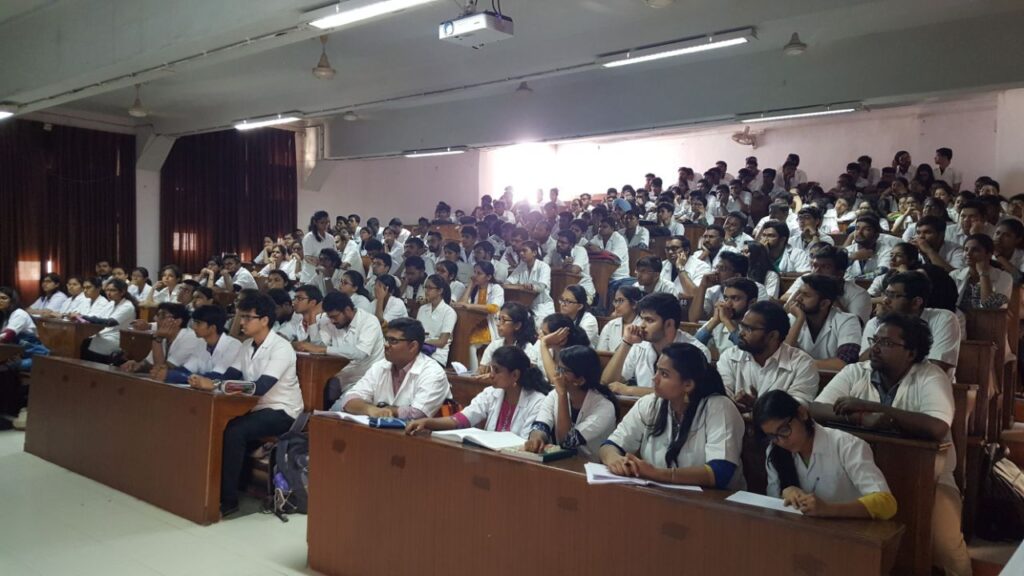
If you’ve just seen an FMGE result that didn’t go your way, you are probably reading this at one of two moments: right after the result, still processing it, or months later, after a second or third attempt, wondering if you’re on the right track at all.
Here is the first thing you need to hear, stated plainly: failing FMGE does not end your medical career. But it does change your timeline, and it forces a decision you may not have wanted to make yet.
Most articles on this topic fall into one of two traps. Either they list generic “career options” without explaining what actually requires a license and what doesn’t, or they quietly imply that failing FMGE opens an easy back door to practicing abroad. Neither is true, and neither helps you plan. This guide is built differently: every claim here is checked against how FMGE, NMC registration, and international licensing pathways actually work, and every alternative career is presented with real trade-offs, not just upside.
This is written the way a mentor would talk to you across a table not to comfort you, and not to frighten you, but to help you make a clear-eyed decision.
Why Do Students Fail FMGE, and How Common Is It?
FMGE (Foreign Medical Graduate Examination) is conducted by the National Board of Examinations in Medical Sciences (NBEMS) under NMC oversight, twice a year, as a single 300-question MCQ paper covering the full MBBS curriculum across 19 subjects. You need 50% (150/300) to pass.
Pass rates are a genuinely contested number you will see figures ranging from roughly 10–25% in some cohorts and consultancy reports to averages closer to 40–50% quoted elsewhere over a five-year span. The honest answer is that the number moves a great deal depending on the country of graduation, the specific session, and how the sample is measured, so treat any single “pass rate” you read online as indicative, not exact the NBEMS result statistics for your specific session are the only reliable number.
What is consistent across sources is why students struggle:
- Curriculum mismatch. Medical education in countries like Russia, Kyrgyzstan, Kazakhstan, Georgia, China, the Philippines, and Bangladesh is not designed around the Indian clinical exam format, so students often study a different depth and sequence of subjects than FMGE tests.
- Weak clinical exposure. Many foreign medical programs offer thinner bedside clinical training than Indian colleges, and FMGE weights clinical subjects (Medicine, Surgery, Obstetrics & Gynaecology, Paediatrics) heavily.
- Language and instruction gaps, particularly where the MBBS was taught in a mix of English and a local language.
- Isolated preparation. Many FMGE aspirants prepare alone, without structured peer groups or mentorship, after returning to India.
- Repeated attempts without a change in method — simply re-sitting the same exam with the same preparation approach, expecting a different result.
None of this reflects a lack of medical aptitude. It reflects a mismatch between how you were trained and how you’re being tested and that is a solvable problem, at least for a defined period of time.
Can You Retake FMGE? How Many Attempts Are Allowed?
As of the most recent 2025–2026 information bulletins, there is no official cap on the number of FMGE attempts you may sit the exam as many times as you need to, twice a year, until you pass.
It’s worth knowing that the NMC floated a proposal in late 2023 to cap attempts at six within a three-year window; that proposal generated significant discussion but does not appear to have been implemented in the FMGE bulletins issued since. Because this is exactly the kind of rule that can change with a single NMC notification, always verify your own eligibility against the current NBEMS information bulletin before you plan your next attempt don’t rely on this article, or any other, as your final word on attempt limits.
There is a second, larger transition underway that affects long-term planning more than any attempt cap: the National Exit Test (NExT), created under the NMC Act 2019 and formalised by the NExT Regulations, 2023, is designed to eventually replace both FMGE and NEET-PG as a single licensing-cum-postgraduate-entrance exam. Its rollout has been repeatedly deferred, and as of 2026, NMC leadership has indicated that pilot/mock testing will continue for several years before full implementation.
For now, FMGE remains the operative exam for foreign medical graduates. If you are early in your attempts, it is worth tracking NExT developments, since the exam format, subject weightage, and internship-linkage may differ meaningfully from the FMGE you are currently preparing for.
Can I Practice Medicine, Work in a Government Job, or Specialize Without Clearing FMGE?
This is the question every other question in this article eventually comes back to, so let’s be direct about it.
No. Without passing FMGE (or its eventual replacement) and obtaining registration with the NMC or a State Medical Council, you cannot legally:
- Diagnose, prescribe, or independently treat patients in India
- Sign prescriptions, discharge summaries, or death certificates as a registered medical practitioner
- Apply for a government Medical Officer post
- Be employed as a “doctor” by a private hospital in a clinical capacity
- Sit NEET-PG or INI-CET, or pursue an MD/MS/DNB in India
- Call yourself a registered medical practitioner in any legal or professional document
This is not a technicality it’s the entire structure that FMGE exists to enforce, and it is enforced at the state medical council registration level, not just on paper. Hospitals that knowingly employ unregistered practitioners in clinical roles are themselves exposed to regulatory risk, which is exactly why legitimate hospitals will not offer you a clinical post without registration, however strong your subject knowledge is.
What FMGE does not gate is anything that doesn’t require Indian medical registration: non-clinical healthcare roles inside India (covered in detail below), and this is the part most articles get wrong most pathways to practice in other countries, because those countries license you against their own primary-qualification and exam requirements, not against your NMC status. Failing FMGE closes the door to clinical practice in India until you clear it (or NExT); it does not, by itself, close the door to the UK, Australia, Germany, or the Gulf, provided you meet those countries’ separate requirements which we’ll walk through honestly in Category C below.
The Biggest Mistake FMGE-Failed Students Make
Across nearly two decades of career counselling, one pattern shows up more often than any other, and it deserves its own section because it is the single most consequential decision point in this entire journey.
Some students keep attempting FMGE for seven, eight, even ten years — treating every attempt as a temporary delay rather than as one data point in a longer decision.
Here is what actually happens during that decade, quietly, in the background, while the exam remains the only visible goal:
- Skills stop compounding. A 24-year-old who fails FMGE and does nothing else for five years doesn’t just lose five years of clinical practice they lose five years in which they could have built a second, transferable skill set (research methodology, data analysis, writing, project management) that would have made them employable regardless of the exam outcome.
- Confidence erodes, and with it, exam performance itself. Anxiety about a high-stakes repeat exam measurably affects performance in test-taking populations generally, and FMGE aspirants are not an exception.
- Age and opportunity cost increase. A 22-year-old exploring alternatives has more open doors internships, entry-level roles, further study than a 30-year-old doing the same thing, purely because of how hiring and program eligibility criteria are structured.
- The field moves. Healthcare technology, treatment guidelines, and even the exam pattern itself (see the NExT transition above) change over a multi-year gap, meaning that time spent solely re-attempting doesn’t fully “bank” some of it has to be re-learned.
- Peers move forward. Classmates who cleared FMGE early, or who pivoted into other healthcare careers, are five or eight years into building seniority, income, and professional identity. This isn’t a reason for shame it’s simply the arithmetic of time, and it’s worth naming honestly rather than avoiding.
The mistake is not attempting FMGE multiple times. Persistence is often exactly the right call, especially in the first two to three attempts, when a genuine change in preparation method can produce a genuine change in result. The mistake is treating it as all-or-nothing refusing to build any parallel skill or credential “just in case,” on the theory that doing so would mean giving up.
The better frame: every year should either move you measurably closer to clearing FMGE, or make you more employable regardless of the outcome ideally both. A student who spends four months a year on structured FMGE preparation and eight months building a genuine clinical research or medical writing skill set is in a stronger position at every single checkpoint than one who spends twelve months solely on repeat attempts with an unchanged method.
The ConsultCK Career Framework
We divide the options in front of you into four categories. None of them is “better” in the abstract the right one depends on your goals, timeline, financial runway, and how strongly you value clinical practice specifically versus a healthcare-adjacent career more broadly.
Category A — Continue Preparing for FMGE
Who this suits: Students within their first 2–3 attempts, especially if a genuine gap has been identified (e.g., weak clinical subjects, first attempt without structured coaching, or a curriculum gap that’s now being actively closed).
Pros: Preserves the most direct path to independent clinical practice, government employment, and PG study in India; no other route replicates this outcome exactly.
Cons: Financially and emotionally costly if pursued indefinitely without a change in strategy; each additional year has a real opportunity cost (see above); doesn’t build a fallback skill set on its own.
Realistic view on success probability: Improves substantially with a genuine change in method (structured clinical-subject-first preparation, mock tests under exam conditions, peer accountability) but a fourth or fifth attempt with an unchanged approach rarely produces a different result. If your last two attempts used the same preparation method and produced similar scores, that is itself useful data.
Suggested timeline discipline: Set a personal review point many counsellors suggest after attempt 3 or 4 to honestly assess whether your score trend is improving, flat, or declining, and revisit this framework at that point rather than by default continuing.
Category B — Alternative Healthcare Careers in India (No FMGE Required)
These roles are employer-governed, not government-licensed meaning MBBS knowledge is valued as domain expertise, but Indian medical registration is not a legal prerequisite. Certifications listed are commonly recommended, not always mandatory.
| Career | Typical Entry Salary (India) | Growth Potential | Common Certification | Future Demand |
| Medical Writing | ~₹3–6 LPA | Senior/Principal roles reported at ₹20–35 LPA | Medical writing certificate courses; strong scientific writing portfolio | Growing, driven by pharma and CRO documentation needs |
| Clinical Research Coordination / CRA | ~₹2.5–6 LPA entry | ₹10–16 LPA at 5+ years; leadership roles higher | ICH-GCP certification widely recommended | Strong — India remains a major global trials hub |
| Pharmacovigilance | ~₹4.5–7 LPA (MBBS entry) | ₹15–25 LPA with MD/experience; senior MNC roles reported higher | PV-specific certificate courses | Strong — regulatory drug-safety requirements are expanding globally |
| Medical Coding | ~₹2.5–4.5 LPA | Moderate; plateaus without specialization | CPC/CCS certification | Steady, especially for US healthcare outsourcing |
| Medical Affairs | ~₹6–10 LPA | Senior Medical Advisor/Director roles significantly higher | Often requires 2+ years clinical or PV experience first | Growing within pharma and medtech |
| Regulatory Affairs | ~₹4–7 LPA | Rises meaningfully with regulatory submission experience | Regulatory affairs certificate programs | Growing with expanding drug/device approvals |
| Healthcare Analytics / Health Informatics | ~₹5–9 LPA | Strong, tied to broader data/AI demand | Health informatics or data analytics certification | High and rising |
| Hospital Administration | ~₹4–8 LPA | Senior administrator roles substantial in large hospital chains | MHA or hospital administration diploma helpful | Steady |
| Medical Devices (clinical/regulatory roles) | ~₹5–9 LPA | Strong in a growing medtech sector | Product-specific training | Growing |
| Digital Health / Medical AI | ~₹6–10 LPA | High, still an emerging field | Health-tech or AI-in-healthcare short courses | High and rising sharply |
| Public Health | ~₹4–7 LPA (varies widely by employer) | Strong for MPH holders in senior public health roles | MPH strongly recommended | Steady, especially in NGO/government/multilateral sectors |
| Medical Education / Faculty support roles | Varies by institution | Moderate | Often needs PG qualification for full faculty roles | Steady |
| Healthcare Startups | Highly variable | High upside, high variance | None mandatory; domain credibility matters | Growing |
| Healthcare Consulting | ~₹6–12 LPA at analyst level | Strong at senior consultant level | MBA often preferred for top firms | Steady, niche |
| Clinical Data Management | ~₹4–7 LPA | ₹12–20 LPA with experience | CDM certification | Growing |
| Quality Assurance (pharma/clinical) | ~₹4–7 LPA | Solid mid-career growth | GCP/QA certifications | Steady |
| Telemedicine (non-clinical support roles) | Varies | Moderate | None mandatory for non-clinical support roles | Growing |
| Medical Content / Medical Journalism | ~₹3–6 LPA | Senior editorial roles higher, especially with a strong portfolio | None mandatory; portfolio-driven | Steady |
Important honesty note on this table: salary figures above are approximate market ranges compiled from multiple industry and recruitment sources current as of 2026, not a guarantee actual pay varies by city, employer, negotiation, and specific responsibilities. Verify current figures with recruiters or employer job postings in your target city before making a decision based on salary alone.
Category C — Global Pathways: What FMGE Failure Does and Doesn’t Affect
This is the section where most competing articles either oversell or underexplain. Here is the honest structure: each country listed below assesses your primary MBBS degree and its own exam requirements none of them ask whether you cleared FMGE, because FMGE is specifically an India-practice requirement. What they do require is real, and often substantial.
- United Kingdom. The PLAB route (PLAB 1 + PLAB 2, both administered by the GMC) leads to GMC registration, independent of FMGE, and is genuinely the most well-trodden pathway for Indian MBBS graduates. You will need IELTS/OET at GMC-specified bands, a verified internship, and worth knowing before you commit the UK’s Medical Training (Prioritisation) Act 2026 now gives UK-trained graduates first access to foundation and specialty training posts, which makes competition for training slots tougher for IMGs even though non-training NHS posts (Trust Grade, Clinical Fellow, SHO roles) remain fully open. Alternatively, MRCP or MRCS can be pursued in some cases without PLAB.
- Australia. India is not a “Competent Authority” country under the Medical Board of Australia’s framework (unlike the UK, Ireland, or New Zealand), so Indian MBBS graduates use the AMC Standard Pathway: primary source verification, English testing, the AMC CAT MCQ exam, and then either the AMC Clinical Exam or a Workplace-Based Assessment, followed by supervised practice. This is realistically a multi-year process often cited as a decade-scale project when you include prior India-based clinical experience and not all specialties are equally accessible to Standard Pathway graduates in the early years, compared with Competent Authority doctors.
- Germany. This is the pathway that most clearly does not touch FMGE at all: Approbation (the permanent German medical licence) is earned through German language proficiency (typically B2, moving toward C1 for clinical communication), the Fachsprachprüfung (FSP), and because Indian and German curricula rarely match exactly a Kenntnisprüfung (knowledge exam) for most applicants. There is no USMLE- or PLAB-equivalent bridge exam, and no FMGE-linkage whatsoever; many applicants work as a supervised “Assistenzarzt” under a temporary Berufserlaubnis while completing the process, typically over 18–30 months.
- Middle East (UAE and broader Gulf). Licensing is emirate-specific DHA for Dubai, DOH for Abu Dhabi, MOH/MOHAP for the northern emirates administered through Prometric computer-based exams after DataFlow primary-source verification. Requirements typically include a recognised MBBS, completed internship, and (for DHA specifically) attempt limits of their own commonly cited as three attempts before a waiting period applies so this is not an unlimited-attempts safety net either; it simply runs on a separate regulatory track from FMGE.
- New Zealand, Ireland. Broadly similar in structure to the UK/Australia model a national medical council registration process with its own exam or assessment requirements, independent of Indian FMGE status.
- USA (research pathway). Without FMGE or Indian PG, entering US clinical practice via USMLE/residency is a long, separate, and highly competitive pathway in its own right; a realistic near-term option for many is a non-clinical research role research assistant, data coordinator, or lab-based positions which uses medical knowledge without requiring US clinical licensure.
- Canada, Singapore. Both maintain particularly restrictive IMG pathways with limited residency positions reserved for international graduates; realistic only with a long planning horizon and, in Canada’s case, provincial variation that needs individual verification.
The throughline across every country above: FMGE failure does not disqualify you from these pathways. Each one has its own genuine barrier language, a separate licensing exam, years of supervised practice, or intense competition for limited seats and none of them should be mistaken for an “easy alternative” to FMGE. They are different mountains, not shortcuts around this one.
Category D — Higher Studies
| Program | Typical Duration | Best Suited For |
| MBA (Healthcare/Hospital Management) | 1–2 years | Those aiming for hospital administration, healthcare consulting, or health-tech leadership |
| MPH (Public Health) | 1–2 years | Those drawn to policy, epidemiology, or NGO/multilateral public health work |
| MHA (Health Administration) | 1–2 years | A more operations-focused alternative to an MBA for hospital-sector careers |
| Clinical Research (PG Diploma/Masters) | 6 months–2 years | Direct entry into CRA, CRC, or clinical operations roles |
| Biomedical Sciences (Masters) | 1–2 years | Those considering a pivot toward research or academia |
| Health Economics / Epidemiology | 1–2 years | Data-and-policy-oriented students, often a strong base for global health roles |
| Digital Health / Bioinformatics / Medical AI | 1–2 years | Those with an interest in the fastest-growing segment of healthcare employment |
Comparison at a Glance
| Career Path | Need FMGE? | Need a License? | Salary Potential | Future Growth | Difficulty |
| Continue FMGE prep | — | Yes (FMGE + NMC/state registration) | High (full clinical practice + PG eligibility) | Stable, structurally protected | High, esp. beyond 3rd attempt |
| Clinical practice in India | Yes | Yes | High | Stable | — |
| Medical writing / clinical research / PV | No | No (employer-set requirements only) | Moderate–High, esp. senior levels | Strong and rising | Moderate |
| Public health / health analytics | No | No | Moderate | Strong | Moderate |
| UK (PLAB) | No | Yes (GMC via PLAB) | High (NHS scale) | Moderate — more competitive post-2026 for training posts | High |
| Australia (AMC Standard Pathway) | No | Yes (AMC + Medical Board of Australia) | High | Strong long-term, slow near-term | Very high, multi-year |
| Germany (Approbation) | No | Yes (Approbation) | High (Euro-denominated) | Strong, structural doctor shortage | High (language-heavy) |
| UAE/Gulf (DHA/MOH/DOH) | No | Yes (country-specific) | High (tax-free) | Moderate, experience-dependent | Moderate |
| MBA/MPH/MHA | No | No | Varies, often strong at senior levels | Strong | Moderate (admissions-dependent) |
Myth vs. Fact
1. Myth: My career is over. Fact: Clinical practice in India is on hold until you clear FMGE (or NExT), but several healthcare careers remain fully open, and international pathways run on entirely separate requirements.
2. Myth: I can practice medicine abroad more easily since I failed FMGE. Fact: FMGE failure is irrelevant abroad either way every country has its own separate licensing exam and requirements, several of which are harder, not easier, than FMGE.
3. Myth: There’s a government job for foreign MBBS graduates that doesn’t need FMGE. Fact: Government Medical Officer posts require NMC/state registration, which requires clearing FMGE (or NExT).
4. Myth: Private hospitals can hire me as a doctor if I’m “good enough” clinically. Fact: Legitimate hospitals require registration before any clinical appointment; unregistered clinical employment exposes both the doctor and the hospital to serious regulatory risk.
5. Myth: Non-clinical careers are a “downgrade” from clinical practice. Fact: Many non-clinical healthcare careers offer strong long-term compensation, better work-life structure, and genuine seniority tracks different, not lesser.
6. Myth: Clinical research and medical writing don’t use my MBBS knowledge. Fact: These fields draw directly on clinical reasoning, pharmacology, and patient-safety concepts MBBS training is a real asset, not incidental.
7. Myth: I need a PG degree to work in pharmacovigilance or medical writing. Fact: Many entry-level roles accept an MBBS alone; PG or specific certifications become more relevant for senior or specialist positions.
8. Myth: FMGE attempts are capped, so I’m running out of time. Fact: As of current bulletins there is no official attempt cap, though this is exactly the kind of rule that can change verify against the latest NBEMS notification for your session.
9. Myth: NExT has already replaced FMGE. Fact: NExT rollout has been repeatedly deferred; FMGE remains the operative exam for foreign medical graduates as of 2026.
10. Myth: If I can’t clear FMGE, I definitely can’t clear PLAB or AMC. Fact: These are different exams testing different things in a different format; some students who struggle with FMGE’s format perform differently on OSCE-style or workplace-based international assessments but none of them are automatically “easier.”
11. Myth: Buying a foreign license or certificate is a viable shortcut. Fact: Forged documentation carries serious legal and professional consequences, including criminal liability and lifelong disqualification this is not a grey-area shortcut.
12. Myth: Once I stop attempting FMGE, I can never go back to it. Fact: There is currently no rule preventing a return to FMGE preparation after time spent in another career, provided your eligibility documents remain valid though a multi-year gap does mean re-learning some material.
13. Myth: Age is a hard barrier to switching careers. Fact: There’s no upper age limit on FMGE itself, and many alternative healthcare careers value experience and maturity but earlier decisions do preserve more entry-level options, which is why timing the decision matters.
14. Myth: An MBA or MPH is only for people who “gave up” on medicine. Fact: These are legitimate, competitive credentials that open senior healthcare leadership and policy tracks used by many practising and non-practising doctors alike.
15. Myth: Parents should keep funding unlimited attempts no matter what. Fact: Most experienced counsellors recommend an honest, periodic review of score trends and financial runway support doesn’t have to mean unconditional, indefinite funding of the same strategy.
Red Flags to Watch For
The period right after an FMGE failure is unfortunately also when students and parents are most targeted by bad actors. Be alert to:
- Agents promising “guaranteed” FMGE clearance or guaranteed foreign licensure — no legitimate exam body offers this.
- Fake or unrecognised internship certificates offered as a shortcut around the compulsory rotating internship requirement.
- Forged or purchased degree/registration documents. This is not a victimless shortcut, and 2026 has made that unmistakably clear: Rajasthan’s Special Operations Group has been investigating a large-scale racket in which foreign medical graduates allegedly used forged FMGE certificates to secure internships and medical council registration, with dozens of arrests reported so far and the state High Court denying bail to those accused treating the use of forged certificates as a serious offence regardless of the validity of the underlying medical degree. The consequences include criminal charges and permanent professional disqualification, not just a failed application.
- “Fast-track” foreign license offers that bypass DataFlow verification, GMC/AMC primary source verification, or Prometric testing these steps exist precisely because they cannot legally be skipped.
- Fake job offers abroad requiring upfront “processing fees” before any verified employer or hospital contract exists.
- Unofficial coaching promises tied to specific “predicted” question papers — FMGE results are released as a merit list without a published answer key or objection window in many cycles, so claims of insider access to questions should be treated with real skepticism.
If an offer sounds like it removes a regulatory step rather than helping you meet it, treat that as the warning sign it is.
Illustrative Case Studies
(The following are composite, illustrative scenarios used for planning purposes, not accounts of specific individuals.)
- “Student A” failed FMGE twice with an unchanged self-study approach, switched to structured clinical-subject-first coaching with regular mock tests for the third attempt, and cleared it — illustrating that a genuine method change, not just repetition, is what moved the outcome.
- “Student B” failed FMGE once, used the following year to complete a clinical research certification while working as a coordinator at a CRO, and built a stable non-clinical career track without ever re-attempting FMGE.
- “Student C” discovered a strong aptitude for scientific writing during FMGE preparation itself, transitioned into medical writing after a single failed attempt, and used MBBS-level pharmacology knowledge directly in regulatory documentation work.
- “Student D” committed early to the Australia AMC Standard Pathway after one FMGE attempt, accepting a multi-year timeline, and used the intervening years for Indian clinical exposure that later strengthened their AMC application.
- “Student E” combined MBBS training with a healthcare-startup role focused on digital patient triage tools, treating the clinical background as a founding-team differentiator rather than a credential gap.
Financial and Emotional Considerations Before Repeated Attempts
Two things deserve direct, unsentimental attention before committing to another attempt:
Financially: repeated coaching fees, exam fees, and lost earning years compound. It’s worth totalling honestly, on paper — what the last two attempts actually cost in coaching, travel, and foregone income, and comparing that to what one more attempt, with a genuinely changed method, would cost. This isn’t about discouraging another attempt; it’s about making the decision with real numbers instead of momentum alone.
Emotionally, for parents specifically: the most useful thing a parent can offer is not unconditional pressure to keep going, nor pressure to stop it’s a calm, judgment-free space to review the score trend together at defined checkpoints, and to make the next decision based on that trend rather than on anxiety in either direction. Students consistently describe feeling more capable of an honest self-assessment when they aren’t managing a parent’s fear or disappointment on top of their own.
Conclusion
| Failing FMGE is not a life sentence. But doing nothing after failing repeatedly can become one. Every year should either move you closer to clearing FMGE or make you more employable ideally both. The smartest students don’t just prepare harder; they prepare smarter, and they build more than one path forward at the same time. |
Suggested FAQ (for FAQ Schema Markup)
Q: What happens if I fail FMGE? A: You cannot yet register with the NMC or a state medical council, which means you cannot legally practice clinical medicine, hold a government medical post, or pursue NEET-PG/INI-CET in India. You can re-attempt FMGE, pursue non-clinical healthcare careers, or explore country-specific licensing abroad.
Q: How many times can I attempt FMGE? A: Current information bulletins indicate no official cap on attempts, though this has been proposed for change before and should always be verified against the latest NBEMS notification.
Q: Can I get a government job without clearing FMGE? A: No — government Medical Officer posts require NMC/state medical council registration, which requires clearing FMGE or its eventual replacement, NExT.
Q: Can I practice in the UK, Australia, or Germany if I failed FMGE? A: Yes, in principle those countries license you against their own exams and requirements (PLAB/GMC, AMC, or Approbation), independent of your FMGE status. Each has its own substantial requirements of its own.
Q: What career options exist if I don’t clear FMGE? A: Medical writing, clinical research, pharmacovigilance, medical coding, regulatory affairs, health informatics, public health, hospital administration, and further study (MBA/MPH/MHA) are all open without Indian medical registration.
Q: Is NExT replacing FMGE right now? A: Not yet. NExT implementation has been repeatedly deferred; FMGE remains the operative exam for foreign medical graduates as of 2026.
Q: When should I stop attempting FMGE? A: There’s no universal number, but reviewing your score trend and financial/emotional runway at defined checkpoints rather than continuing by default is what experienced counsellors generally recommend.