
A practical guide to private MD/MS fees, education loan repayment, career ROI and alternative pathways for medical graduates and their parents.
If you come from a middle-class family, are a first-generation doctor, and are considering taking a massive education loan or mortgaging your family home to secure a private MD/MS seat, please pause before making that decision.
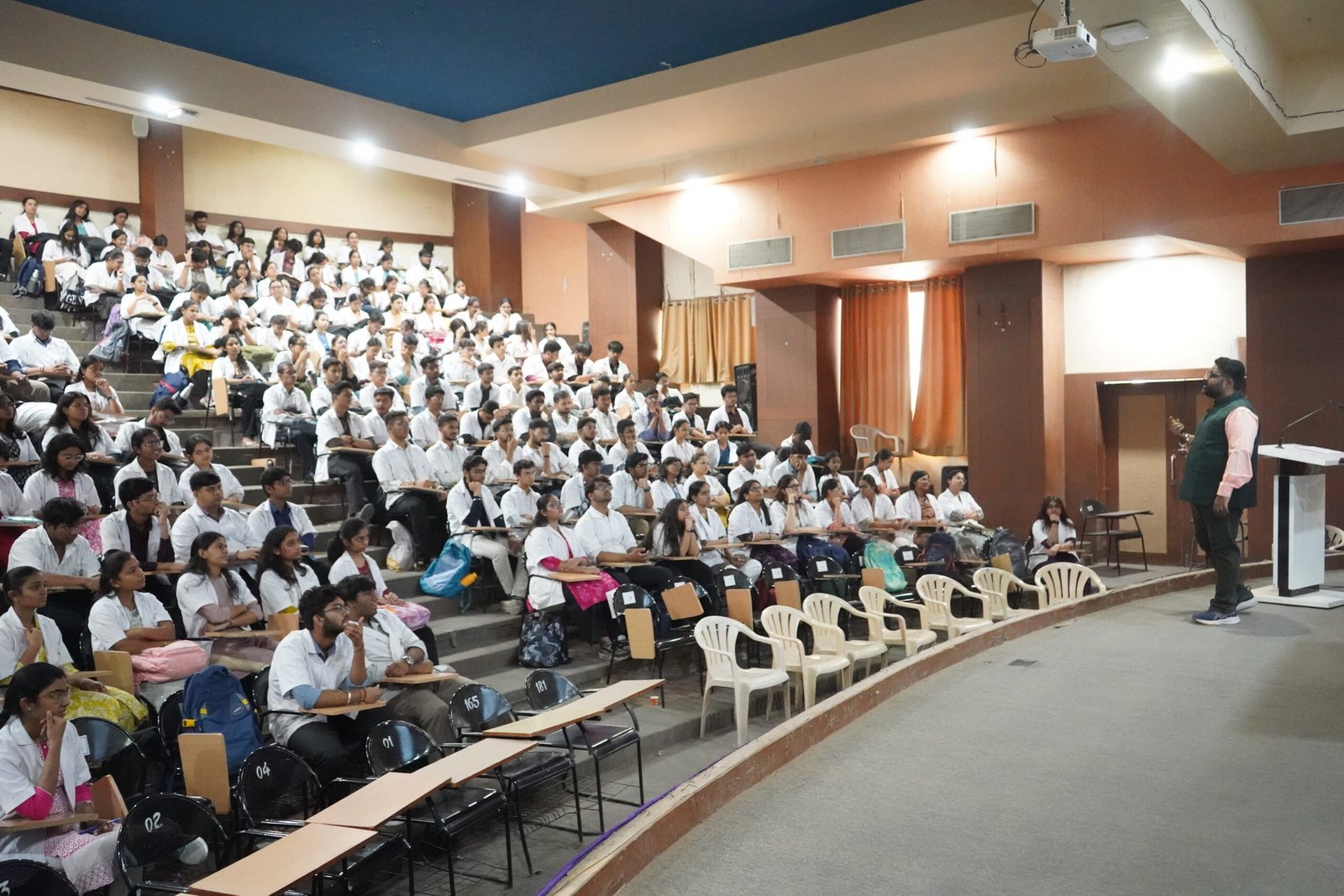
An MD/MS seat is an achievement. But is it worth putting your family’s financial future at risk to secure one?
As NEET PG 2026 counselling approaches, students and parents must look beyond their rank, preferred speciality and the immediate excitement of securing a seat. They must evaluate the total cost of postgraduate medical education, the repayment burden, realistic career prospects and, most importantly, whether the chosen pathway aligns with their long-term career destination. This is not an argument against postgraduate medical education in India. Nor is it an argument against education loans. It is a call for informed decision-making before committing ₹75 lakh, ₹1 crore or even ₹1.25 crore towards a private MD/MS seat.
At ConsultCK, we believe that career decisions should be driven by a student’s aspirations, abilities and circumstances and not by fear of missing out.
1. The Real Cost of a Private MD/MS Seat in India
Private medical college fees vary significantly by institution, speciality, state, quota and counselling category. Certain postgraduate programmes can cost several tens of lakhs, while some high-cost private seats can exceed ₹1 crore for the course.
Tuition is not necessarily your only expense. You may also need to account for:
- Hostel and mess charges.
- Deposits and other compulsory fees.
- Living and travel expenses.
- Books, equipment and professional expenses.
- Education loan interest and related charges.
Before participating in NEET PG 2026 counselling, obtain the latest official fee structure for every college and speciality you are considering. Verify the applicable counselling authority’s notices and confirm the total payable amount directly with the institution.
Never evaluate an MD/MS seat using tuition fees alone. Calculate the total cost of completing the programme and financing it.
2. What Does a ₹1 Crore Education Loan Actually Cost?
Let’s examine an illustrative education loan of ₹1 crore at an annual interest rate of 9.4%.
| Repayment period | Approx. monthly EMI | Total repayment | Total interest |
| 10 years | ₹1.29 lakh | ₹1.55 crore | ₹55 lakh |
| 15 years | ₹1.04 lakh | ₹1.87 crore | ₹87 lakh |
Illustrative calculations assume a fully disbursed ₹1 crore loan, a constant 9.4% annual interest rate and standard monthly amortisation. Actual figures depend on the lender’s terms.
A longer repayment period reduces your monthly EMI but increases the total interest paid.
There is another consideration: interest accumulated during postgraduate training. Depending on the loan agreement, interest may accrue during your study period or moratorium. If unpaid interest is capitalised, the outstanding balance at repayment can be substantially higher than the original amount borrowed. For example, if interest accrues on a fully disbursed ₹1 crore balance for three years at 9.4%, without any interest payments, the accumulated simple interest would be approximately ₹28.2 lakh. Actual loan arrangements differ, and disbursement may occur in instalments. Ask your bank for a written repayment illustration showing the outstanding balance at course completion, the EMI start date and the total cost of borrowing. A ₹1 crore loan is not merely a ₹1 crore commitment. Depending on the repayment structure, it can become a commitment approaching ₹2 crore. Before taking the loan, ask yourself: Does the expected career outcome justify this financial burden?
3. Can You Manage a ₹1 Lakh EMI on a Doctor’s Salary?
Many students assume that completing an MD/MS will automatically translate into a high income. In reality, earnings vary by speciality, location, institution, experience, employment model and the time required to establish a practice.
Consider this hypothetical monthly budget after postgraduate training:
| Expense | Illustrative monthly amount |
| Education loan EMI | ₹1,04,000 |
| Rent and household expenses | ₹35,000 |
| Transportation and personal expenses | ₹15,000 |
| Family support and other obligations | ₹20,000 |
| TOTAL | ₹1,74,000 |
These are illustrative amounts, not estimates for every doctor. A home loan, children’s education, dependants or professional expenses could increase the total substantially. The key issue is cash flow. If your income takes longer than expected to grow, a large EMI can restrict your ability to save, invest in professional development, establish a clinic or handle unexpected expenses. For a first-generation doctor, the financial consequences can extend beyond the individual to the entire family.
Before borrowing, prepare three financial scenarios:
- Conservative: Your initial income is lower than expected or takes longer to materialise.
- Expected: Your employment and income progress broadly as anticipated.
- Optimistic: You secure a desirable position and your income grows faster.
If repayment is manageable only in the optimistic scenario, reconsider the size of the loan or the cost of the seat.
4. Will an Expensive MD/MS Seat Deliver a Good Return on Investment?
Return on investment (ROI) in medical education cannot be judged by the college fee or the salary of one successful graduate. It depends on the total educational cost, the time required to begin earning, realistic income prospects and the professional opportunities available to you.India’s postgraduate medical education capacity has expanded considerably. Government-reported figures show that postgraduate seats increased to 86,360 in 2025–26, alongside further government initiatives to expand training capacity. However, more seats do not automatically mean better employment opportunities or attractive financial returns in every speciality and location. Demand varies across specialities and regions; hospital infrastructure, patient volumes, access to specialist care and the distribution of healthcare services all influence career opportunities.
Before choosing an expensive private MD/MS programme, investigate:
- The quality of clinical exposure and procedural training.
- The hospital’s patient load and case mix.
- Employment opportunities for graduates of the programme.
- The realistic income range for doctors with comparable training and experience.
- Whether your preferred career requires further specialisation.
- The cost of establishing a private practice, if that is your goal.
For certain career paths, MD/MS may be followed by DM, MCh or additional training, extending the time before a doctor reaches their intended professional role. For others, an MD/MS may provide a direct route into employment or practice.
Do not pay a premium for a seat without understanding the career pathway that follows it.
5. Before Spending ₹1 Crore on MD/MS in India, Rethink Your Long-Term Career Pathway
Where do you ultimately want to practise medicine and does the postgraduate degree you are paying for today help you get there?
If you are considering borrowing ₹75 lakh to ₹1.25 crore for an MD/MS seat, do not make the decision simply because you have secured a rank or because your family wants you to specialise at any cost. First, evaluate your long-term career destination.
Scenario 1: You intend to migrate abroad after completing PG in India
If your ultimate goal is to practise in the United States, UAE, Australia, Ireland or another country, understand the relevant licensing, postgraduate training and specialist recognition requirements before investing heavily in an Indian MD/MS programme. An Indian MD/MS does not automatically exempt you from US licensing requirements or guarantee entry into a US residency programme. Depending on your qualifications and speciality, additional examinations, credential verification, training or other requirements may apply. If you already know that you want to build your medical career abroad, compare the complete pathways before committing to an expensive Indian PG seat. Evaluate the cost of Indian MD/MS followed by the relevant overseas pathway against the cost, duration, eligibility requirements and risks of pursuing the overseas pathway directly after MBBS.Neither route is automatically superior. Your academic profile, target country, speciality, finances and probability of achieving your goal should determine the decision.
Do not spend a crore of rupees on a degree without first understanding whether it advances the career you ultimately want.
Scenario 2: Your family already owns a hospital or has an established medical practice
The financial calculation can be very different if your family owns a hospital, has an established practice or can provide an existing patient base and professional infrastructure. An MD/MS may help you develop the speciality expertise required to contribute to the family enterprise. Existing infrastructure, professional relationships and a long-term succession plan may improve the potential value of the investment. Even then, the fee must be justified by the speciality, training quality and your intended role in the family business. Having a family hospital does not automatically make every expensive seat worthwhile, but it can change the financial and professional context in which the decision is made.
Scenario 3: You are a first generation doctor planning to build a career entirely in India
If you do not have a family hospital, an established practice or an existing patient base, you may need to build your professional reputation and practice from the ground up. That is entirely achievable. Many first-generation doctors build excellent careers.However, the financial pathway can be more demanding when you combine a large education loan with the costs of establishing a practice, developing a referral network and managing household responsibilities. Before taking a major loan, understand the likely employment opportunities in your chosen speciality, the time required to establish yourself and the realistic cost of building your preferred career. Do not assume that completing an expensive MD/MS programme will automatically deliver a high income immediately after graduation.
Decide your destination before choosing the route
- PG in India followed by a career in India: Evaluate the speciality, institution, employment prospects and total cost.
- PG in India followed by migration abroad: Verify whether the Indian degree and training align with the requirements of your target country.
- An international pathway after MBBS: Compare licensing requirements, residency eligibility, total investment, competition and realistic career outcomes.
- Joining or expanding a family hospital or established practice: Evaluate how the degree contributes to the long-term clinical and business plan.
Your next step should not automatically be to take a loan. Your next step should be to evaluate your career pathway.
6. Should You Consider USMLE Instead of an Expensive Private MD/MS Seat?
For Indian medical graduates interested in practising in the United States, the USMLE pathway deserves serious consideration alongside postgraduate options in India.
In the United States, residency positions are generally salaried training positions. Residents receive compensation during training rather than paying private-college tuition for their residency. This is a fundamentally different financial model from paying high tuition fees for a private postgraduate seat in India. However, this does not mean that every Indian medical graduate can enter a US residency programme or that the pathway guarantees a financial return.
The process can involve:
- USMLE examination and preparation costs.
- Credential verification and application expenses.
- Clinical experience and related travel, where applicable.
- Interview and relocation expenses.
- Visa and immigration considerations.
- The possibility of needing additional application cycles.
Matching into residency is competitive. According to the National Resident Matching Program’s 2026 data, non-US-citizen international medical graduates who were active applicants had a 56.4% PGY-1 match rate. This is a group level statistic, not an individual’s probability of matching.
For a student with a suitable academic profile, a realistic financial plan and a genuine interest in US medical practice, the pathway may be worth evaluating alongside postgraduate options in India. For another student, postgraduate training in India may be the better choice.
Do not choose USMLE because someone promises guaranteed earnings abroad. Do not choose an expensive Indian MD/MS seat simply because it is the conventional next step. Choose after evaluating both pathways against your long term goals.
7. What Should You Do If the Available MD/MS Seat Is Too Expensive?
An expensive seat may be a reasonable decision for a family that can comfortably fund it and for a student who has evaluated the programme’s likely outcomes. It may be a risky decision for a family that must borrow almost the entire amount, mortgage its home or exhaust its long-term savings.
Option A: A government or more affordable postgraduate seat
If an appropriate government or lower-cost seat is available, the reduced financial burden may offer greater flexibility after graduation. The trade off is that the available speciality, location or institution may differ from your first preference.
Option B: An expensive private MD/MS seat
This may be worth considering when the programme fits your career goals, the training quality is appropriate and the financing plan remains manageable under conservative assumptions. The decision should be based on the actual institution and speciality not on the assumption that every private seat offers the same value.
Option C: Another attempt or a different speciality
If the available options are financially unsustainable, consider whether another attempt, a broader speciality preference or a different institution could improve your choices. Another attempt has its own costs, including time, preparation and uncertainty, and should not be treated as an automatic solution.
Option D: An international medical career pathway
If you are genuinely interested in practising abroad, investigate the relevant licensing and postgraduate training pathways before committing to an expensive seat in India. The USMLE pathway is one option worth understanding, but it requires its own financial, academic and career assessment.
The important point is that you have a decision to make not simply a seat to accept.
8. Five Questions Every Student and Parent Must Answer Before NEET PG Counselling
- What is the total cost of the programme? Include tuition, hostel, compulsory charges, living expenses and the cost of borrowing.
- How much will we need to borrow? Obtain the actual loan terms, including the interest rate, moratorium, collateral requirements, interest during training and repayment schedule.
- Can we afford the EMI if income growth is slower than expected? Use conservative income assumptions. Do not rely on a guaranteed government job or immediate success in private practice.
- Does the speciality and institution justify the investment? Investigate training quality, graduate outcomes, employment opportunities and the need for further specialisation.
- Have we compared the alternatives against our long-term career destination? Evaluate government seats, lower-cost institutions, another attempt where appropriate and international pathways if they align with your goals. If you plan to migrate abroad or join a family hospital, account for those plans before making the decision.
If the numbers do not work, pause before committing. A decision that protects your family’s financial security may be wiser than accepting an unaffordable seat under pressure.
9. The Right Career Decision Is Not Always the Most Expensive One
The cost of medical education and its impact on middle-class families deserve serious discussion. For additional perspectives, read:
- Moneycontrol: India Is Training Doctors for the World, but It Is Pricing Out the Middle Class — https://www.moneycontrol.com/news/opinion/india-is-training-doctors-for-the-world-but-it-is-pricing-out-the-middle-class-14036078.html
- The New Indian Express: Doctor Dreams? It’s a Living Nightmare — https://www.newindianexpress.com/states/karnataka/2022/Mar/06/doctor-dreamsits-a-living-nightmare-2426934.html
These articles discuss the affordability challenges surrounding medical education and the financial pressure faced by aspiring doctors and their families.
As a career counsellor, my advice to NEET PG aspirants is straightforward. Do not let FOMO, peer pressure or the fear of losing a year make a crore-rupee decision for you. Do not judge your success solely by whether you secure an MD/MS seat this year. Judge it by whether the pathway you choose allows you to build the career you want while managing its financial consequences.
If you intend to practise abroad, understand the international pathway before investing heavily in Indian PG. If you have an established family hospital, evaluate how the degree contributes to that enterprise. If you are a first-generation doctor building a career from scratch, pay particular attention to affordability and the time needed to establish yourself.
Your dream of becoming a specialist should expand your future and not mortgage it.
Need Help Evaluating Your Medical Career Options?
At ConsultCK, we help medical students and graduates explore career pathways, assess their options and make informed decisions about postgraduate education in India and international opportunities.
If you are unsure whether an expensive private MD/MS seat, another NEET PG attempt, postgraduate training in India followed by migration, or an international pathway after MBBS fits your circumstances, seek personalised guidance before making a major financial commitment.
Visit https://consultck.in/events to explore a counselling appointment, or whatsapp on +917045522007 to discuss your career options.
Choose the pathway that makes sense for your career, your finances and your future.
Written by Chirag Khutia, Founder and Chief Career Coach, ConsultCK.