
Getting admission into an MBBS programme is a significant achievement. After years of preparing for NEET-UG, students finally enter medical college with the dream of becoming doctors. However, many soon discover that succeeding in medical school requires a completely different approach to studying.
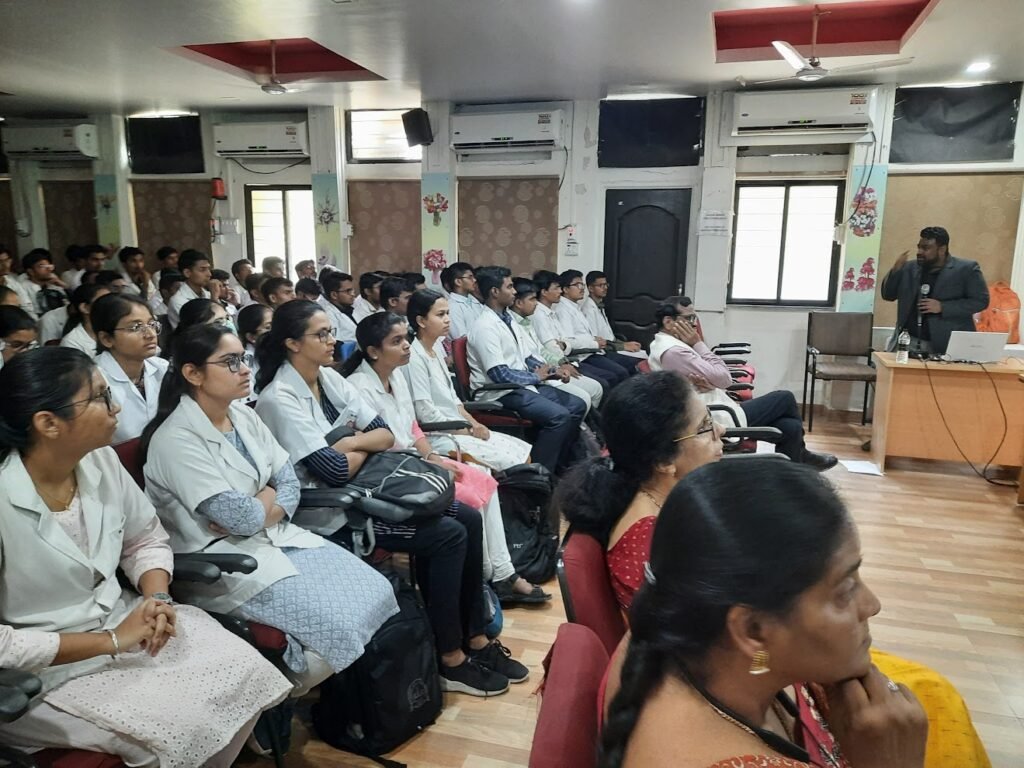
The transition from NEET preparation to first-year MBBS can be challenging. There are new subjects, extensive textbooks, demanding lectures, practical sessions, dissection hall experiences, internal assessments and university examinations. Students who were accustomed to performing well through structured coaching and repetitive preparation may suddenly find themselves struggling to manage the academic workload. One of the biggest mistakes first-year medical students make is assuming that studying longer automatically means learning better.
The real challenge is not simply how many hours you study, but how effectively you use those hours.
Developing the right study habits, managing time, retaining medical knowledge and maintaining motivation from the beginning can make a significant difference to your medical school journey.Here are practical, research-informed study and time management tips to help first-year MBBS students become more effective learners.
1. Understand That MBBS Requires a Different Approach to Learning
NEET preparation and medical school learning are two different experiences. During NEET preparation, students generally follow a structured syllabus, attend coaching classes, solve MCQs and prepare for a competitive examination.MBBS requires a broader approach. Students must understand concepts, remember anatomical structures, interpret physiological mechanisms, learn biochemical pathways and gradually develop the ability to apply theoretical knowledge to clinical situations.
For example, memorising the names of the cranial nerves is different from understanding their functions, pathways, associated clinical findings and implications of nerve damage.
Instead of asking, “How much of the chapter have I completed?”, start asking:
- Can I explain this concept without looking at my notes?
- Can I connect it with something I have already studied?
- Can I draw the relevant diagram from memory?
- Can I answer questions that test my understanding?
- Can I explain the concept to another student?
This shift from passive reading to active understanding is one of the most important changes you should make.
2. Develop a Realistic Daily Study Schedule
Time management is one of the most important skills for a first-year medical student. Your day may include lectures, practicals, dissection hall sessions, tutorials, assignments, extracurricular activities and personal commitments. Without a schedule, it is easy to spend the entire day attending classes and postpone independent study until late at night. Start by preparing a weekly timetable.
Your schedule should accommodate:
- College lectures and practical sessions.
- Daily revision of topics taught in class.
- Independent study and textbook reading.
- Anatomy diagrams and practical preparation.
- MCQ practice and self-assessment.
- Physical activity, meals, sleep and relaxation.
A useful starting point is to reserve approximately 2–3 focused hours for independent study outside college, adjusting the duration according to your academic schedule and individual needs. A 2021 observational study involving 675 medical students found that 43.4% reported studying for 3–4 hours daily. However, this should not be interpreted as a compulsory target or a proven formula for academic success.
Consistency matters more than occasionally studying for extremely long hours.
3. Set Daily Learning Goals Instead of Studying Without Direction
One common problem among first-year MBBS students is sitting with a textbook without deciding what they want to accomplish. For example, writing “Study Anatomy” in your timetable is not a meaningful goal.
Instead, break the task into smaller, measurable objectives:
- Complete the introduction to the upper limb.
- Understand the brachial plexus and draw it from memory.
- Revise the major muscles of the arm.
- Solve 20 questions related to the day’s topics.
- Review yesterday’s lecture notes.
This makes your study sessions more focused and allows you to track your progress.
Try dividing your goals into three categories:
- Daily goals: Topics to understand and revise today.
- Weekly goals: Chapters or practical competencies to complete.
- Monthly goals: Syllabus milestones and preparation for upcoming assessments.
At the end of each day, spend five minutes reviewing what you accomplished and identifying unfinished tasks.
4. Avoid Distractions and Protect Your Study Time
Smartphones, social media notifications, messaging applications and unnecessary conversations can significantly interrupt concentration. A student may sit at a desk for three hours but spend considerable time switching between Instagram, WhatsApp and textbooks. The solution is to create a distraction-free study environment.
Try these strategies:
- Keep your smartphone away during focused study sessions.
- Switch off non-essential notifications.
- Inform friends or roommates when you need uninterrupted time.
- Choose a quiet and comfortable study location.
- Avoid studying with multiple unnecessary tabs or applications open.
You can also experiment with the Pomodoro technique: study for 25–50 minutes, followed by a short break. The exact duration is less important than maintaining focused, uninterrupted learning.
5. Practise Active Recall Instead of Simply Reading Textbooks
Reading a textbook repeatedly can create a false sense of familiarity. You may recognise a diagram or paragraph when you see it, but struggle to reproduce the information during an examination. This is why active recall is important. Active recall means deliberately retrieving information from memory without looking at the textbook or notes.
For example, after studying the brachial plexus:
- Close your textbook.
- Draw the roots, trunks, divisions, cords and branches.
- Identify the nerves arising from each cord.
- Explain the clinical significance of an injury.
- Check your answer against your notes.
Other useful techniques include flashcards, self-questioning, blank-page revision and explaining concepts aloud. Stanford School of Medicine’s study-skills guidance specifically distinguishes recognising information from being able to recall it independently. The objective is simple: Do not just test whether you have read something. Test whether you can remember and explain it.
6. Follow Spaced Repetition to Improve Long-Term Retention
Medical education involves learning a large amount of information. If you study a topic once and never revisit it, you are likely to forget parts of it. Spaced repetition involves revisiting information at planned intervals rather than studying everything repeatedly in one sitting.
A practical revision schedule could look like this:
| Revision session | What to do |
|---|---|
| Day 1 | Learn the topic and understand the concepts |
| Day 2 | Recall the main points without notes |
| Day 7 | Revise diagrams, concepts and important facts |
| Day 14 | Attempt questions and identify gaps |
| Day 30 | Conduct a cumulative revision |
This is a suggested framework, not a scientifically fixed timetable. Adjust the intervals according to how well you remember the material. You can use flashcards or applications such as Anki to organise your revision. The important principle is to revisit information before it becomes completely unfamiliar.
7. Use Multiple Learning Resources, But Avoid Information Overload
First-year students often become confused about which textbook, video or online resource to follow. For Anatomy, some students prefer textbooks and atlases, while others find anatomical videos and illustrations easier to understand. For Physiology, visual explanations and flowcharts can help clarify complex mechanisms. For Biochemistry, concept maps and pathway diagrams can make metabolic processes easier to follow.
However, using too many resources can become counterproductive.
A sensible approach is:
- Follow the recommended textbook or primary teaching material of your college.
- Use lecture slides and faculty notes to understand the prescribed syllabus.
- Refer to an additional resource when a concept is unclear.
- Use educational videos to visualise difficult topics.
- Practise questions to evaluate your understanding.
Do not spend more time searching for the perfect study resource than actually studying. Technology should support learning, not become another distraction.
8. Learn to Study Independently and Take Effective Notes
Your college lectures are an important starting point, but they cannot replace independent learning. University College London highlights independent learning, critical thinking, note-making and research evaluation as important academic skills for medical students. Develop the habit of reviewing lecture material regularly.
One practical approach is:
Before class: Spend 10–15 minutes looking through the topic and identifying unfamiliar terms.
During class: Listen carefully, understand the explanation and note important points rather than attempting to copy every word.
After class: Review your notes, clarify difficult concepts and reorganise important information in your own words.
Your notes should be concise and useful for revision. They should not become another textbook that you spend hours preparing. For example, when studying the cardiac cycle, a flowchart showing the relationship between pressure changes, valve movements and heart sounds may be more useful than several pages of copied text.
9. Teach Your Peers and Participate in Group Learning
One of the most effective ways to identify gaps in your understanding is to explain a concept to someone else. Suppose you have studied the mechanism of muscle contraction. Try explaining the sequence of events to a classmate without referring to your notes. If you cannot explain a particular step, you have identified an area that needs further revision.
Peer learning can also help students:
- Exchange different ways of understanding difficult concepts.
- Practise viva questions.
- Revise anatomical structures.
- Discuss clinical correlations.
- Prepare for practical examinations.
However, group study should have a clear purpose. A group that spends two hours discussing unrelated topics is not necessarily contributing to academic progress. Use independent study for initial understanding and group discussions for revision, clarification and testing.
10. Prepare Differently for Regular Study and University Examinations
There is an important difference between studying throughout the academic year and preparing for examinations. When there is no immediate examination, focus on understanding concepts, following lectures, making concise notes and revising regularly. As examinations approach, change your strategy.
Prioritise:
- College lecture slides and prescribed syllabus.
- Important topics identified by faculty.
- Previous university question papers.
- Diagrams, definitions and structured answers.
- Practical and viva preparation.
- Timed self-assessment.
Previous examination papers can help you understand question patterns and identify topics that require more attention. However, do not depend exclusively on previous questions. Medical education is about building knowledge, not merely predicting examination questions.
11. Maintain Motivation and Look After Your Well-Being
The first year of MBBS can be emotionally demanding. Students may experience academic pressure, homesickness, difficulty adjusting to hostel life, competition among classmates and anxiety about examinations. Some may also struggle because they were previously among the top-performing students but now find themselves surrounded by equally capable peers. Remember that your medical journey is a long-term commitment.
A few important habits can help you maintain balance:
- Get adequate sleep.
- Include regular physical activity.
- Maintain relationships outside academics.
- Take breaks without feeling guilty.
- Avoid comparing your study hours with those of classmates.
- Seek help when you find a subject particularly difficult.
Motivation should not depend entirely on examination results. Remind yourself why you chose medicine and the kind of doctor you aspire to become.
12. Think Beyond First-Year Examinations: Start Building Your Medical Career Foundation
Your first year is not just about passing Anatomy, Physiology and Biochemistry. It is also an opportunity to develop habits that will influence your future professional journey. As you progress through MBBS, you will encounter questions about postgraduate specialisation, NEET-PG, INI-CET, USMLE, PLAB, AMC, clinical research, academic medicine and international career opportunities. You do not need to make all these decisions in your first year.
However, you can begin developing skills that will be useful throughout your career:
- Communication and presentation skills.
- Critical thinking and problem-solving.
- Research literacy and evidence-based learning.
- Teamwork and collaboration.
- Digital literacy and responsible use of AI.
- Professionalism and time management.
Build these skills gradually without allowing additional activities to interfere with your academic foundation.
A Practical Daily Routine for First-Year MBBS Students
Here is an illustrative routine that students can adapt to their college timings.
| Time | Activity |
|---|---|
| 6:30–7:30 AM | Wake up, exercise and get ready |
| 8:00 AM–4:00 PM | College lectures, practicals and lunch (illustrative) |
| 4:00–5:00 PM | Rest and personal time |
| 5:00–6:00 PM | Review topics taught during the day |
| 6:00–6:30 PM | Break and physical activity |
| 6:30–7:30 PM | Focused subject study |
| 7:30–8:30 PM | Dinner and relaxation |
| 8:30–9:15 PM | Active recall, diagrams and MCQs |
| 9:15–9:30 PM | Plan the next day |
| 10:30–11:00 PM | Prepare for sleep |
The timetable is only an example. Adjust it to your college schedule, commute, personal commitments and individual energy levels. Protect adequate sleep rather than extending study hours late into the night.
How ConsultCK Can Help Medical Students Navigate Their Journey
Being admitted to medical college is the beginning of a long professional journey. Students need more than academic knowledge to make informed decisions about their future. Questions about postgraduate education, specialisation, international medical pathways, research opportunities and profile development often emerge during MBBS. Having access to the right information and guidance at the right time can help students avoid confusion and make better-informed decisions.
At ConsultCK, Chirag Khutia brings 18 years of experience in international education, including professional experience with Kaplan and Becker Healthcare, and has guided more than 50,000 students through their career journeys.
Through structured career counselling and mentorship, ConsultCK helps medical students understand their options, identify their interests and plan their professional development. The objective is not to push every student towards an international career or a particular postgraduate pathway. It is to help each student understand the available opportunities and make decisions aligned with their interests, abilities and aspirations.
Your first year is the right time to develop good habits, understand yourself as a learner and build a strong foundation for the doctor you want to become.
Conclusion: Study Smart, Stay Consistent and Enjoy Your Medical Journey
There is no single study timetable or learning technique that works for every medical student. Some students understand concepts better through diagrams, others through textbooks, videos or discussions. What matters is identifying effective methods, evaluating your progress and making improvements. Start with manageable goals. Attend lectures actively, revise regularly, practise active recall, avoid unnecessary distractions and seek help when required. Do not measure your progress only by the number of hours spent studying or the marks obtained in examinations. Measure it by how much you understand, retain and can apply.
Remember: Becoming a good doctor begins with becoming an effective learner.
If you are a medical student looking for clarity about your academic development and future career options, connect with ConsultCK for structured medical career guidance and mentorship.